Welcome to the Free Press blog! We post several times a week on everything from Internet access to free speech to media mergers, so check back often to see what we’re up to.
A letter
to the editor of the New York Times from Verizon Chairman Ivan
Seidenberg had us scratching our heads at Free Press today.
Seidenberg wrote to rebut
an Op-Ed written by former White House technology adviser Susan
Crawford, in which she states that the United States high-speed Internet
marketplace suffers from a lack of competition, a problem that drives up
broadband prices for American Internet users.
The Federal Communications Commission is still mulling
proposed changes to the rules that protect the public from media monopolies.
But reports that the agency is considering handouts to broadcasters have compelled dozens of organizations to remind the FCC that its policies must benefit the public.
The
media have enormous power to shape our culture. Unfortunately,
our mainstream media often perpetuate negative and harmful representations of
people, especially women and people of color. So it’s not a coincidence that the people who own our country’s broadcast outlets
are overwhelmingly white and male.
For decades, some of the best journalism in
America has been produced by nonprofit news organizations. Consider, for
example, National Public Radio, National Geographic,
the Associated Press, Consumer Reports,
the American Spectator, Mother
Jones and the Center for Public Integrity.
But now, thanks to a strange intersection of tax
law and media policy, nonprofit news has hit a roadblock.
On Friday, Rep. Ed Markey joined Sen. Al Franken in demanding answers from Carrier IQ, the company that has worked with mobile carriers to install a hidden application that has the ability to secretly track nearly everything users do — including the keys they press, the numbers they dial and the websites they visit — on more than 140 million cellphones. Researcher Trevor Eckhart uncovered the secret app.
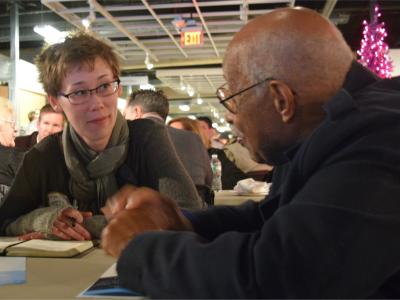
On Thursday, nearly 200 Atlantans gathered at Georgia
Tech to talk media ownership. Federal Communications Commissioners Mignon
Clyburn and Michael Copps urged the people of Atlanta to demand better news,
and to participate in debates about media ownership.
While the arrests are perhaps the worst examples of press suppression, other reports of police roughing up journalists or blocking them from reporting continue to roll in. Even in New York City, where the NYPD has ordered its officers not to interfere with press, journalists are still being harassed.
A researcher just discovered a hidden
application that records what millions of people write, view and search for
on their mobile phones. It sends all of that data to a company no one’s ever
heard of. And we have no idea what that company is doing with our information.