

Matt Wood

Policy Director

Matt helps shape our policy team’s efforts to protect the open Internet, prevent media concentration, promote affordable broadband deployment and prioritize a revitalized public media. Before joining Free Press, he worked at the public interest law firm Media Access Project and in the communications practice groups of two private law firms in Washington, D.C. Before that, he served as editor-in-chief for the Harvard Civil Rights-Civil Liberties Law Review, worked for PBS, and spent time at several professional and college radio and television stations. Matt earned his B.A. in film studies from Columbia University and his J.D. from Harvard Law School.

Blog Posts

  • Spies Like Us

    June 6, 2013
    This is big. And positively frightening. The Obama administration is spying on all calls millions of Verizon customers make each day to any phone number inside or outside the United States.
  • Why Did Wireless Networks Fail After Hurricane Sandy?

    November 21, 2012

    After Hurricane Sandy tore through the country, thousands of people were left without access to communications networks — right when they needed them most.

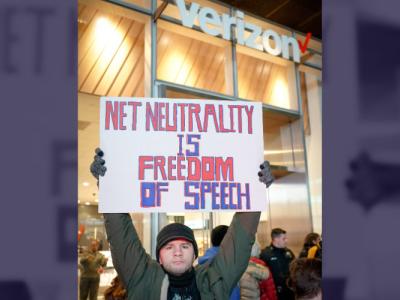
  • FCC Commissioner McDowell Wrong on Net Neutrality and Investment

    October 19, 2012

    Washington, D.C., is often referred to as a “bubble,” and for good reason. On any given day there will be some kind of panel at an industry-funded “think tank” that includes regulators or other government officials speaking about the ills of government — and the virtues of unrestrained monopoly. This week we got two of these bubble moments courtesy of the Federal Communications Commission.

Recent Press Statements

  • Coalition of More Than 80 Organizations and Internet Companies Calls on Congress to End NSA Spying

    June 11, 2013
    On Tuesday, the Free Press Action Fund and more than 80 organizations and Internet companies sent a letter demanding that Congress halt and investigate the National Security Agency’s surveillance programs. The signers include the American Civil Liberties Union, the Electronic Frontier Foundation, Mozilla and reddit. The letter coincided with the coalition’s launch of StopWatching.Us, a site demanding an inquiry into the scope and scale of the NSA’s spying activities.
  • Free Press Condemns Government Collection of Electronic Communications

    June 7, 2013

    WASHINGTON — Since 2007, the federal government has been working with the nation's top Internet companies — a group that reportedly includes Apple, Facebook and Google — to access their users' electronic communications. Under the surveillance program, known as PRISM, the National Security Agency collects foreign communications traffic from these companies. It's likely that PRISM also sweeps in Americans' domestic electronic communications.

  • Free Press Decries Spying Program

    June 6, 2013

    WASHINGTON — The U.S. government has obtained a top secret court order requiring Verizon to turn over records of all calls the company’s customers make. The National Security Agency is collecting information on the numbers that Verizon customers call and on the duration of each call.

In the News

  • Consumer Groups Angered Over ESPN Plan to Subsidize Cellphone Data Plans

    The Hill
    May 14, 2013

    Consumer groups are outraged about a potential plan for ESPN to subsidize smartphone data usage, saying it would violate the principle of Net Neutrality.

  • Controversial CISPA Security Bill Passes in the House

    San Francisco Chronicle
    April 19, 2013

    The threat of a White House veto and denunciation of dozens of civil liberties groups wasn’t enough. The House of Representatives passed the Cyber Intelligence Sharing and Protection Act, a dangerously broad effort to fortify the nation’s cyber defenses by allowing private and public entities to share data. Because of the way the bill is written that can include the private communications of consumers.

  • FaceTime on AT&T Extended to 3G Users -- But Still Not Everyone

    NBC News
    January 17, 2013

    When Apple's FaceTime was made available to iPhone users on AT&T, the carrier only allowed the video-chatting service to be used over Wi-Fi, severely reducing its usefulness. After opening it up to 4G users late last year, they're now letting 3G, tiered-data customers have FaceTime as well -- but a few are still left out in the cold.

People + Policy

= Positive Change for the Public Good

people + policy = Positive Change for the Public Good